

The NFL Draft is an event that ignites fervor and speculation amongst fans, analysts, and team executives alike. Among the plethora of budding talents, two names have risen prominently above the din: Brian Thomas Jr. and Josh Downs. The debate over which player represents the better draft pick not only encompasses their individual talents but also poses questions about team needs, fit within offensive schemes, and potential for impact at the professional level.
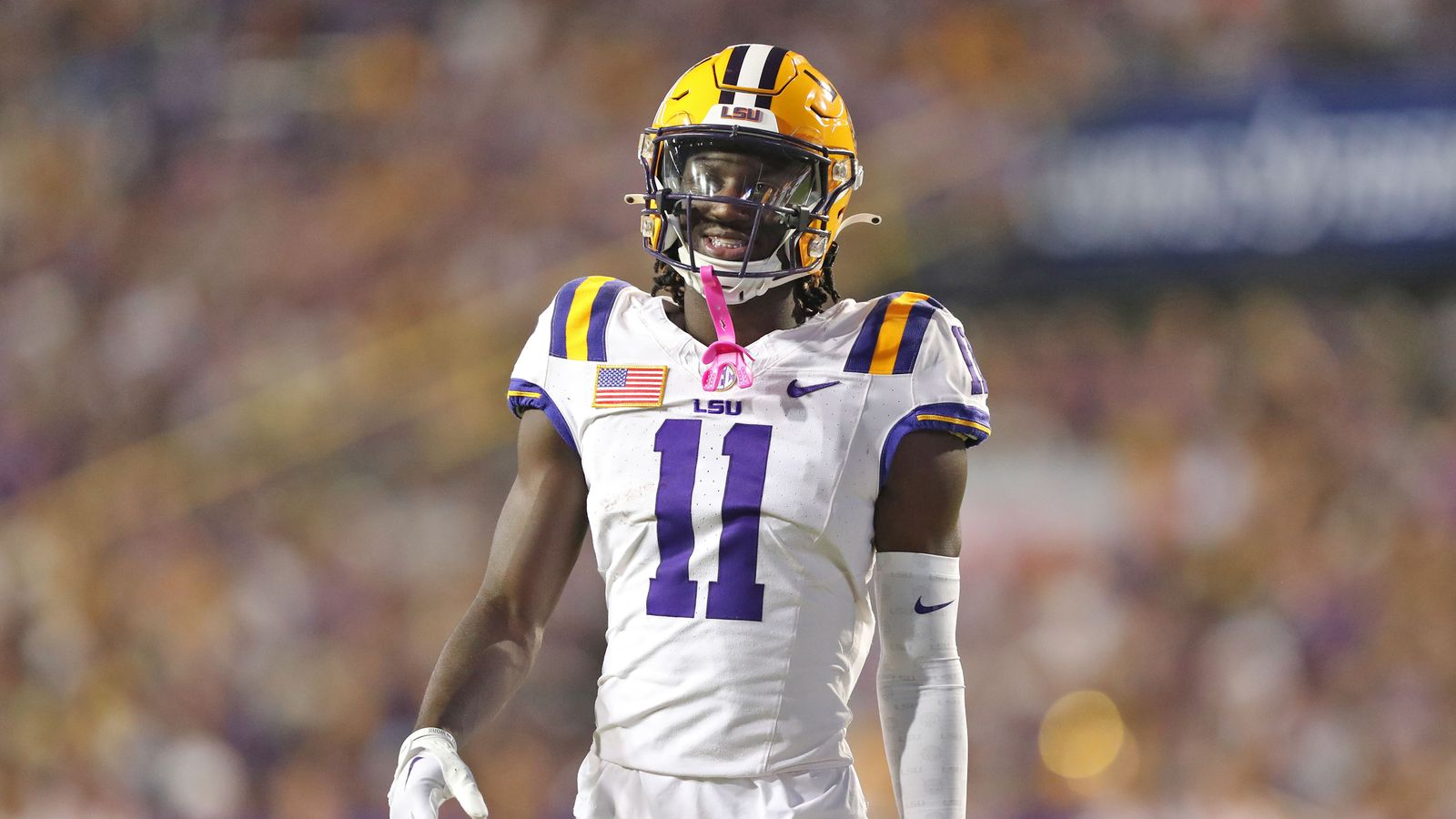
Brian Thomas Jr., a standout from LSU, brings a fascinating blend of size and agility. Standing at 6’4″ and weighing approximately 210 pounds, he presents a formidable presence on the field. His capacity to create mismatches against smaller defensive backs is a critical component of his skill set. Thomas possesses remarkable physical traits — he has the ability to stretch the field, combined with an impressive catch radius that makes him a prime candidate for a team in need of a boundary receiver. What truly sets Thomas apart is his ability to make contested catches; he thrives in situations where concentration and tenacity are paramount.
On the other end of the spectrum, we have Josh Downs, a dynamic receiver out of North Carolina. Downs, at 5’10” and 175 pounds, epitomizes the term ‘slot weapon.’ His quickness, agility, and sharp route-running skills make him a nightmare for defenders, particularly in short and intermediate routes. One of Downs’ most enticing attributes is his ability to gain yards after the catch, making him a valuable asset in an offense that emphasizes creating explosive plays. His versatility allows him to be utilized in various formations, which can be instrumental in modern offensive schemes that favor movement and fluidity.
When considering who might be the superior pick, it’s essential to assess the broader context of each player’s strengths relative to team needs. For franchises vying for a tall, physical receiver, Brian Thomas Jr. could serve as a perennial end zone threat. His red-zone efficiency is impressive, and his ability to high-point balls could be particularly attractive to teams struggling to find reliable offensive options close to the goal line. Additionally, teams that have an established quarterback but lack reliable options on the perimeter might find Thomas the offset they desperately need.
Conversely, for teams that favor a pass-centric offensive approach, Joshua Downs may be the more desirable choice. His contributions extend beyond mere stats; he has an innate understanding of how to exploit soft spots in zone coverage. Furthermore, he has demonstrated the ability to adjust his routes mid-play, enabling quarterbacks to rely on him as a safety valve in crucial moments. As NFL offenses evolve towards quick-strike capabilities, a player like Downs could be integral in providing those explosive, game-changing plays.
Furthermore, both players come with their unique set of challenges. Thomas, while physically imposing, has had bouts with inconsistencies in concentration during games, leading to dropped passes at critical junctures. In a league where every possession counts, ensuring that you can trust your receiver to secure the football is non-negotiable. His development will require meticulous coaching to enhance his focus and ensure he maximizes his potential.
On the other hand, Josh Downs faces concerns about his size. In a league increasingly favoring taller receivers, his stature could render him more susceptible to injuries or less effective against bigger defensive backs. However, his lateral quickness and acceleration sometimes mitigate these concerns. Teams that can strategize effectively around his attributes will find themselves with a potent weapon on their hands.
The positional needs of franchises and their offensive philosophies also play a pivotal role in this debate. Take, for instance, a team like the Green Bay Packers, which has traditionally relied on a singular, dominant wide receiver while cultivating depth around him. They may lean towards a size-oriented prospect like Thomas. In contrast, a team like the Kansas City Chiefs, known for their unconventional schemes and speed-first approach, might gravitate towards someone like Downs, who can operate effectively in various roles.
Ultimately, the choice between Brian Thomas Jr. and Josh Downs transcends mere statistics and metrics. It is a philosophical decision rooted in understanding a team’s identity, future trajectory, and existing roster dynamics. The excitement surrounding the NFL Draft hinges on this exploration of potential and promise. Each prospect symbolizes uncharted territory for a franchise — a tantalizing opportunity to reshape their narrative, elevate their performance, and revitalize their roster.
As the draft day approaches, teams are left pondering: who holds more promise? Will it be the towering, physical receiver capable of dominating in contested situations, or the agile, quick-footed slot receiver who can change the game in the blink of an eye? This decision could very well shape their respective franchises for years to come, making it imperative they view every facet of each prospect’s capabilities.
In this captivating debate, the answer is as multi-faceted as the players themselves. Both Brian Thomas Jr. and Josh Downs have the potential to impact their teams significantly, albeit in different ways. Such nuances are what make the NFL Draft a constant source of intrigue, urging fans and analysts to engage in spirited discussions about the future of the league and its next generation of stars. In the end, each choice made on draft day can alter the course of a franchise, ushering in a new era filled with promise, excitement, and endless possibilities.
