

Owning a 2010 Ford F-150 is like having a reliable companion that is always ready for an adventure. Its rugged design, coupled with powerful capabilities, makes it a top choice for truck enthusiasts and everyday drivers alike. But how much can it really haul? That’s the million-dollar question for many potential owners and current drivers pondering their next big project. Understanding the towing capacity of your F-150 could be the difference between a smooth ride and a painstaking struggle.
The 2010 F-150 comes with a variety of engine options, each tailored for different needs, which directly influences its hauling prowess. From the robust 4.6-liter V8 to the impressive 5.4-liter V8 and the ultimate 6.2-liter V8, each engine offers a unique blend of horsepower and torque designed for optimal towing efficiency. Let’s delve deeper into how each option contributes to the truck’s overall capabilities.
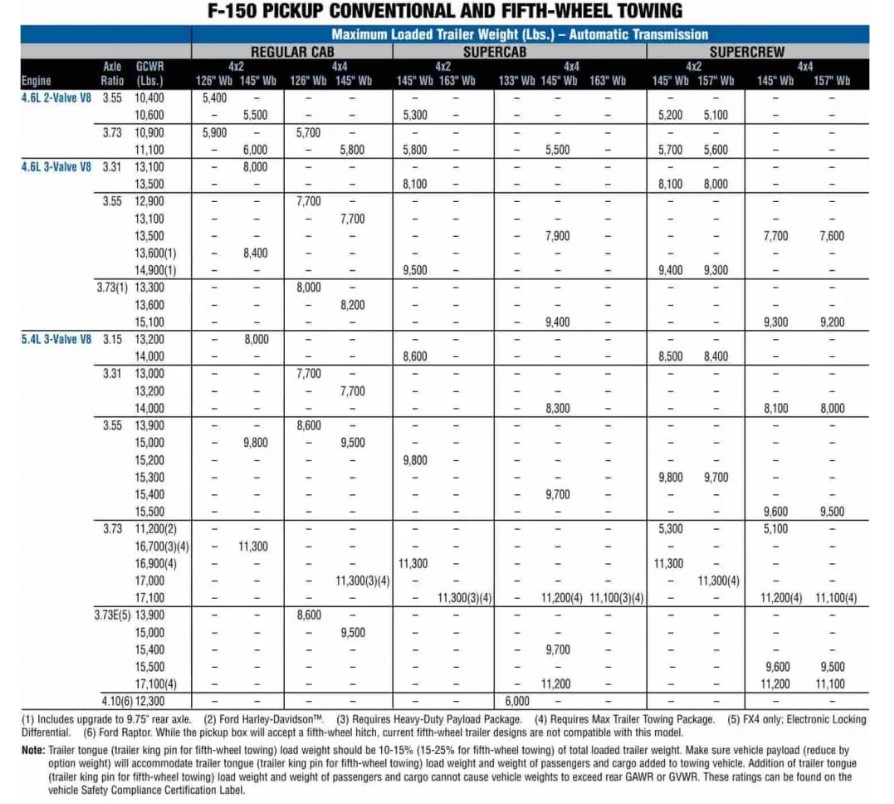
At the heart of the F-150’s allure is its capacity to tow heavy loads, ideal for those who frequently haul trailers, boats, or even construction equipment. The F-150 boasts a maximum towing capacity ranging from 5,500 to 11,300 pounds, depending on the engine configuration and additional equipment. This impressive range is undoubtedly a highlight of the 2010 model year, but paired with the right features, it becomes an empowering tool for any task.
Now, here’s a playful challenge: Imagine you’ve just purchased that shiny F-150 and have your sights set on an epic camping trip. You’re excited to bring along not just your gear, but also a trailer full of kayaks, bikes, and friends. Will you be able to tow it all without a hitch (pun intended), or will you find yourself in a precarious situation trying to manage a load that exceeds your truck’s capacity? Indeed, knowing the ins and outs of towing capacity is paramount, especially for ambitious weekend warriors.
Equipped with the right knowledge, your F-150 can conquer various challenges that lie ahead. So, let’s explore each engine and how it affects your towing capacity. The 4.6-liter V8, while the smallest and least powerful, still boasts a respectable towing capability. It’s perfect for lighter tasks, like hauling a jet ski or a small trailer. You can expect this engine to manage up to around 6,800 pounds with the right configuration. Not bad for a daily driver!
Next up is the well-regarded 5.4-liter V8, which strikes a fantastic balance between power and efficiency. This engine is a favorite among those who require a little more muscle for work and play. With the proper equipment, you can tow up to 10,000 pounds. Whether you’re heading out for a hiking trip with a large travel trailer or taking your construction gear to the job site, this engine has you covered.
Finally, let’s not forget the powerhouse of the lineup—the 6.2-liter V8. When it comes to serious hauling, this option is king. Providing an astonishing towing capacity of 11,300 pounds, it’s tailored for those who need brute strength and dependability. Whether you’re navigating steep hills with a full load or cruising down the highway, this engine has the sheer force to handle heavy weights with ease.
Beyond the engine itself, several other factors influence towing capacity that every F-150 owner should consider. One critical factor is the truck’s axle ratio. A higher axle ratio can amplify towing abilities, allowing for more torque at lower speeds—beneficial when starting from a complete stop with a heavy load. Additionally, trailer brakes, hitch systems, and weight distribution can all impact how well the truck performs under load.
But what if you find yourself exceeding the towing capacity? This is a critical consideration. Overloading your truck can lead to significant safety concerns, as well as potentially catastrophic mechanical failures. It not only threatens your truck but also endangers your passengers and others on the road. Therefore, always know your limits and factor in your cargo weight, trailer weight, and any additional equipment.
Understanding the towing capacity also brings clarity to important aspects like braking distances and overall handling. A burdened F-150 will require more time to come to a halt, so keeping a safe distance from other vehicles is essential. Moreover, the weight distribution affects how the truck drives; an uneven load can cause swaying, making maneuverability a challenge, especially in windy conditions.
Another vital piece of the towing puzzle is ensuring you have the right equipment. Proper hitches, chains, and braking mechanisms are crucial. Using the recommended hitch class not only maximizes towing efficacy but also complies with safety regulations and guarantees you enjoy an efficient and secure towing experience.
In conclusion, owning a 2010 F-150 is a tremendous asset, and understanding its towing capacity is imperative for maximizing its potential. By knowing your engine options, considering vehicle features, and being mindful of safety regulations, you can confidently face any challenge that comes your way. Whether it’s hauling gear for a weekend getaway, managing construction materials, or simply transporting your cherished belongings, your truck will be ready to roar. So, what’s next on your agenda? The open road awaits, and your trusty F-150 is poised for action.
