
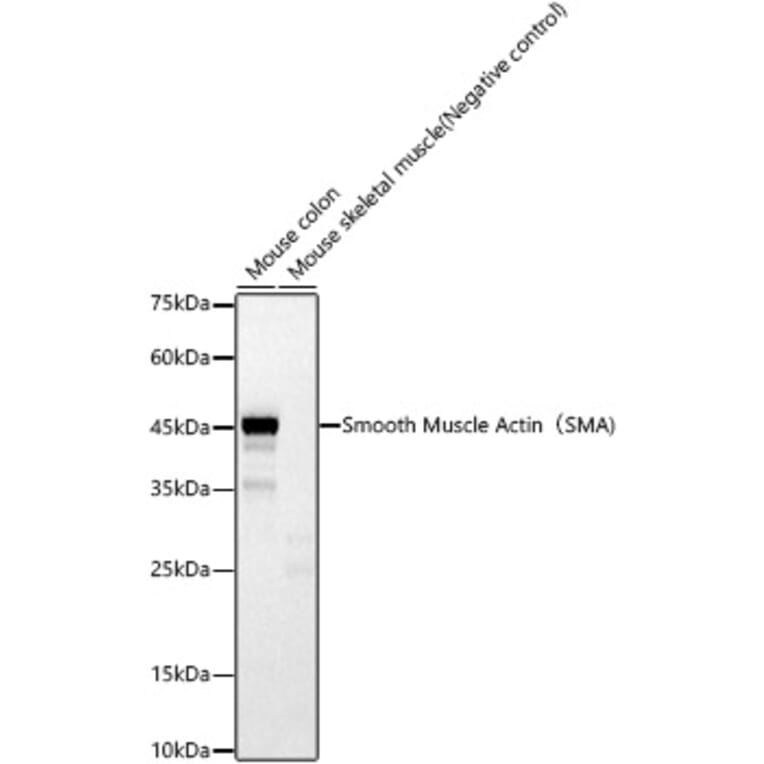

In the vast universe of biological research, the role of antibodies has garnered considerable attention, particularly in elucidating the function of proteins like alpha smooth muscle actin (α-SMA). This protein, a member of the actin family, plays a pivotal role in the contraction of smooth muscle tissues, and acts as a biomarker in various fibrotic diseases and cancers. Understanding the intricacies of α-SMA and the antibodies developed against it opens a fascinating narrative about cellular dynamics and tissue functionality.
Alpha smooth muscle actin is primarily expressed in smooth muscle cells, which line our blood vessels, digestive tract, and other organs. It is instrumental in regulating blood pressure, digestive processes, and overall homeostasis. When researchers observe overexpression or aberrant localization of α-SMA, it often signals pathological conditions such as hypertension, atherosclerosis, or fibrosis. This broad spectrum of involvement ignites intrigue — what is it about α-SMA that makes it so indispensable in both healthy and diseased states?
The journey toward understanding α-SMA begins with examining its structure. As a globular protein, actin polymerizes into filamentous structures, creating a network that forms the cytoskeleton of cells. The α-SMA variant is characterized by its unique amino acid sequence, which endows it with the capability to interact with myosin and other contractile proteins, facilitating muscular contraction. This contractility is crucial not only in smooth muscle cells; it also plays a formidable role in myofibroblasts during wound healing and tissue repair. Herein lies one of the numerous paradoxes of life: the same protein that is integral for normal physiological functions can become a harbinger of disease when its expression spirals out of control.
With the discovery of α-SMA came the necessity for highly specific antibodies that could distinguish this protein from its isoforms and other actin variants. Antibodies against α-SMA have become invaluable tools in research and clinical diagnostics. These antibodies permit the visualization and quantification of α-SMA expression in various tissues, which is a critical aspect in the assessment of conditions such as liver cirrhosis, kidney disease, and malignancies. Techniques like immunohistochemistry (IHC) and Western blotting utilize α-SMA antibodies to delineate the presence of myofibroblasts, particularly in the context of fibrosis, where myofibroblast accumulation can lead to dysfunctional tissue remodeling.
Additionally, the utilization of α-SMA antibodies has transcended diagnostic applications, venturing into therapeutic realms. For instance, targeted therapies that manipulate α-SMA expression or function hold promise in treating fibrotic diseases. Research has indicated that modulating α-SMA activity could potentially lead to enhanced fibrotic resolution after injury. This intersection of antibody research with therapeutic innovation exemplifies the incredible potential embedded in the biochemical understanding of proteins and their relevant pathways.
Yet, the fascination surrounding α-SMA and its antibodies extends beyond mere functional biochemistry; it delves into broader philosophical questions about the nature of health and disease. The dual nature of α-SMA, as both a vessel of physiological function and a marker of pathological states, prompts researchers and clinicians alike to ponder how cellular mechanisms are intricately woven into the fabric of life. Can a simple protein hold the keys to unraveling the complexities of disease? The answer appears to hinge upon the nuanced interplay between various cellular components and their response to internal and external stimuli.
Moreover, the quest for better α-SMA antibodies continues to be an evolving narrative. While several commercially available options exist, research is actively exploring improvements in specificity, affinity, and overall performance. Monoclonal antibodies, for instance, are engineered to target a specific epitope on the α-SMA molecule, enhancing detection sensitivity and enabling clearer insights into cellular pathophysiology. This evolution not only enriches scientific inquiry but also enhances clinical diagnostics, guiding treatment decisions for a myriad of conditions.
The significance of α-SMA research also resonates with the burgeoning field of personalized medicine. As the healthcare landscape shifts towards tailor-made therapeutic approaches, understanding the specific roles of proteins like α-SMA allows for more precise interventions. For example, individuals with specific patterns of α-SMA expression may benefit from customized treatment protocols targeting their unique fibrotic response. This paradigm shift underscores a pivotal moment in medical history where precision is paramount, echoing a growing trend toward individualized care.
Furthermore, the implications of α-SMA research span into regenerative medicine. Tissue engineering and stem cell research often harness the capabilities of myofibroblasts and their α-SMA expression for creating new transplantable tissues. The synergies forged from combining cellular biology, immunology, and material sciences could eventually yield solutions for organ failure, significantly enhancing patient outcomes and quality of life.
In conclusion, the exploration of alpha smooth muscle actin and its antibodies illustrates a compelling intersection of fundamental biology, clinical applications, and philosophical inquiries. This protein, while seemingly innocuous in its role, becomes a pivotal player in the narrative of health and disease. The ongoing research surrounding α-SMA not only enhances our understanding of cellular mechanisms but also paves the way for innovative therapeutic strategies that could transform the landscape of medicine in profound ways. As we continue to peel back the layers of cellular interactions and antibody functionalities, we find ourselves at the precipice of a new era in biological research—one that promises to redefine our perceptions of health, disease, and the very nature of life itself.
