
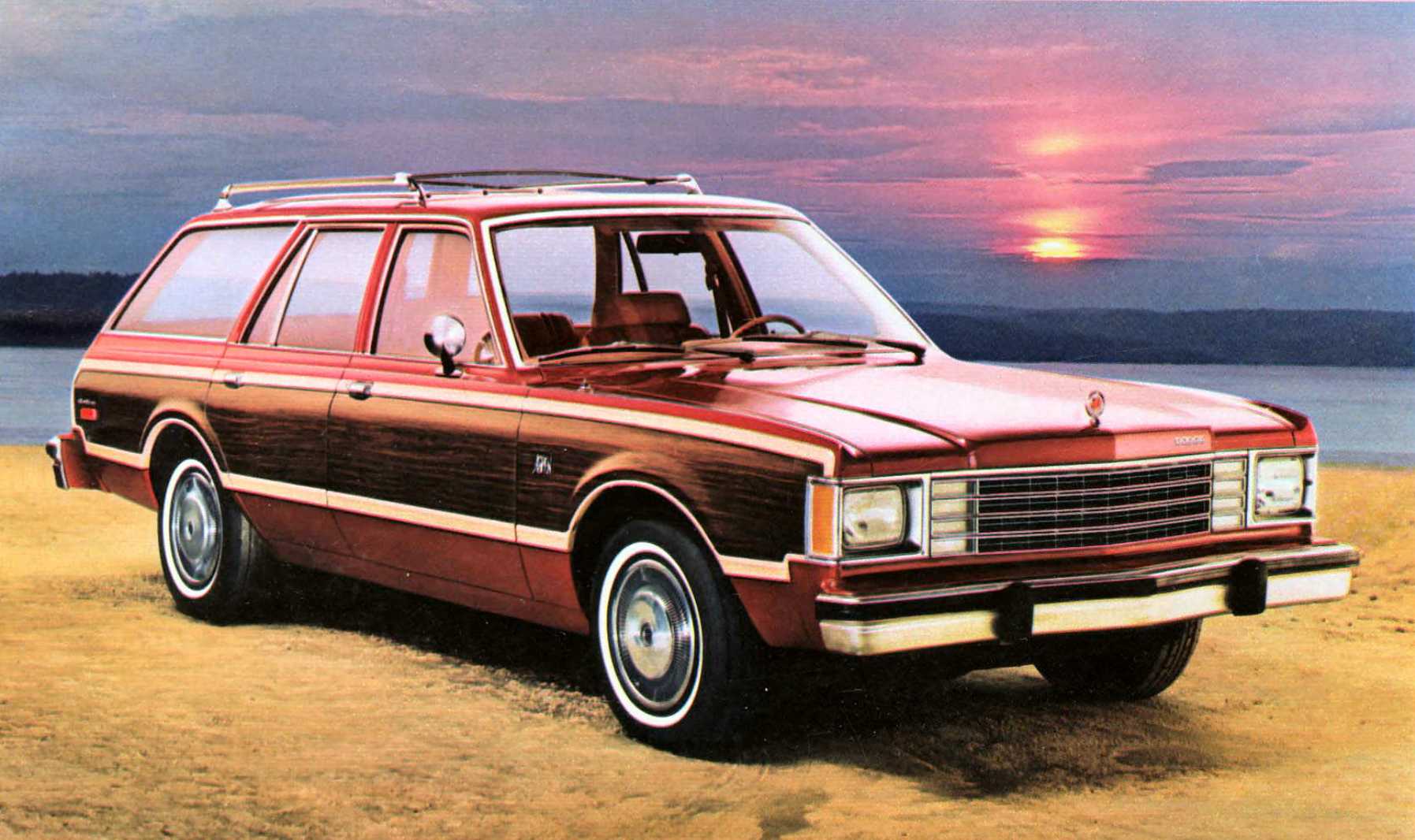

In the realms of automotive history, certain models possess an allure that transcends their technological specifications or performance metrics. The 1977 Dodge Aspen Station Wagon, often overshadowed by its contemporaries, commands attention not only for its functional capabilities but also for its emblematic role in an era characterized by shifting consumer preferences. As families sought spacious and practical vehicles, the Dodge Aspen emerged as a standout, capturing the essence of late 1970s American motoring. This blog delves into the specifics of this remarkable vehicle, examining its specifications, features, and the underlying reasons for its enduring fascination.
The Dodge Aspen launched in 1976, was part of Chrysler’s “M” platform which aimed to deliver a reliable and functional vehicle while economizing on production costs. The 1977 iteration of this station wagon was a continuation of that philosophy, demonstrating an admirable marriage of style and utility. Most notably, the Aspen was available in several trims, including the base model, the Special, and the more luxurious Custom. This offered potential buyers a variety of options suited to their needs and desires.
One of the key features of the 1977 Dodge Aspen was its spacious interior. Designed with family travel in mind, the Aspen could comfortably seat up to six passengers, making it an ideal choice for those long cross-country road trips that defined American life in the late 20th century. The rear bench seat could be folded down, allowing for increased cargo space, a feature that was especially appreciated by families carrying all manner of gear. With a versatile interior and ample space, the Aspen could easily transition from grocery hauler to weekend adventure vehicle.
The station wagon’s dimensions further illustrated its practicality. At a length of approximately 197 inches, a width of 70.6 inches, and a height of 56.3 inches, it was built on a wheelbase of 108 inches, thus providing a solid foundation that contributed to its stability on the road. This size complemented the aesthetics, harmonizing with the dominant design elements of the time—slender lines and a prominent front end. Its proportions and curvaceous edges offered a touch of sophistication amidst an increasingly utilitarian automotive landscape.
Performance-wise, the 1977 Dodge Aspen was outfitted with an array of engine options designed to cater to diverse driver preferences. Buyers could choose between a 225-cubic inch Slant Six engine, renowned for its durability and ease of maintenance, or opt for the more robust 360-cubic inch V8, which delivered admirable power. The latter, while less fuel-efficient, offered a driving experience that some aficionados still reminisce about today. The choice between these engines allowed prospective owners to tailor their vehicle according to their desires for both efficiency and performance, a nuance that many may overlook.
In addition to the engine diversity, the Aspen provided various transmission options. The standard three-speed manual transmission offered an engaging driving experience for those who enjoyed the art of shifting gears, while the optional three-speed TorqueFlite automatic transmission catered to those seeking a more leisurely drive. This range of options reflected Dodge’s understanding of their consumer base, catering to both the purist and the practical driver.
The 1977 Dodge Aspen also embraced a more modern approach to safety and comfort features than many of its predecessors. The availability of power steering and power brakes contributed to a more intuitive driving experience, while optional air conditioning was a welcome respite during sweltering summer journeys. Additional features such as chrome bumpers, vinyl upholstery, and an assortment of color choices allowed for bespoke customization, making each vehicle uniquely appealing. The astute buyer could craft a car that not only looked good but also offered a sense of personal style.
There’s an element of nostalgia that surrounds the Dodge Aspen that speaks volumes to its legacy. For many, owning an Aspen was not merely about transporting a family; it was a symbol of freedom—the freedom to explore, venture, and create memories. The station wagon era was one characterized by the notion of the open road and spontaneous adventures, and the Dodge Aspen captured this spirit beautifully. It embodies a time when cars were less about sheer horsepower and speed, and more about the experiences they facilitated.
Furthermore, the fascination with the Dodge Aspen is not solely rooted in its outward characteristics or performance. It serves as a cultural artifact, an embodiment of a transitional phase in American automotive design. During the late ’70s, consumers were beginning to gravitate toward more compact vehicles that promised better fuel economy, likely a reflection of the oil crises occurring in that decade. In contrast, the Dodge Aspen, despite being a full-size wagon, offered a semblance of the more expansive, luxurious drives of the earlier years.
In retrospect, the 1977 Dodge Aspen Station Wagon has secured a place in automotive history for reasons that extend far beyond its specifications. It carried with it the hopes and dreams of families sampling the freedom that comes with road travel. As vintage car enthusiasts and collectors look back on this era, the Aspen stands not just as a model but as a testament to a lifestyle—an aspirational vehicle that symbolizes the bygone era of family road trips and unvarnished Americana.
Ultimately, though the 1977 Dodge Aspen Station Wagon may never attain the legendary status of some of its peers, it deserves recognition for what it represented—a convergence of practicality, nostalgia, and a sense of adventure. As the golden age of station wagons recedes further into the annals of history, the Dodge Aspen remains a poignant reminder of a uniquely American love affair with the automobile.
