
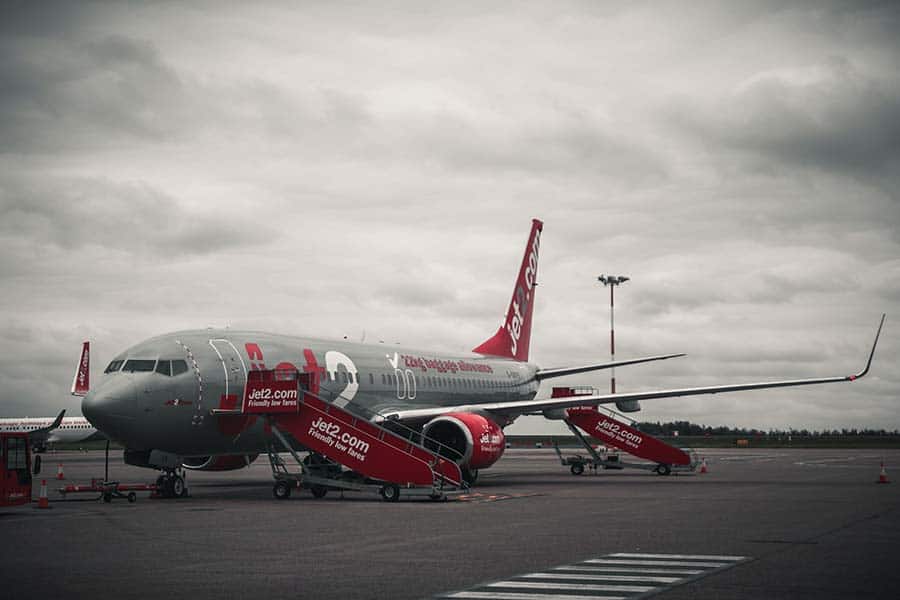

When we envision air travel, we often picture a seamless journey soaring above fluffy white clouds, the sun shining brightly. However, the reality is that nature can be unpredictable, especially when it comes to our tumultuous friend—thunderstorms. Specifically, the question arises: Can planes take off in scattered thunderstorms? The answer is nuanced and evokes a myriad of considerations that go beyond the simple yes or no.
To embark on this exploration, it’s crucial to understand the nature of thunderstorms. These meteorological phenomena are fueled by moisture and instability in the atmosphere, often accompanying heavy rain, lightning, and gusty winds. Scattered thunderstorms, as opposed to a continuous storm front, occur sporadically and can present aviation challenges that vary substantially in severity and occurrence. So, do pilots gamble with nature, or is there an informed decision-making process at play?
Airlines and aviation authorities prioritize safety above all. Before takeoff, comprehensive forecasting and analysis are conducted to evaluate the situation. Pilots, equipped with advanced weather radar and communication tools, assess real-time weather data, which is pivotal in making informed decisions. Intriguingly, the advancements in meteorological technology, such as satellite imagery and ground-based radar systems, have substantially enhanced the predictive capacity of weather systems, allowing for quicker and more accurate assessments.
So, what exactly happens when scattered thunderstorms are present? It’s a delicate balancing act. If thunderstorms pose minimal risk—defined by manageable wind shear and cloud-to-ground lightning—aircraft may still proceed with takeoff. However, when the thunderstorm’s characteristics escalate, decisions shift rapidly. Factors such as the frequency of lightning strikes, wind gusts, and the potential for turbulence are evaluated with great scrutiny.
When lightning is evident nearby, it initiates a critical protocol. Partying in proximity with the foul weather is not a prudent pursuit; hence airports may secure ground operations. Aircraft and personnel have to stay safely away from the runway during these electric spectacles. Grounding operations ensures that no individual is in jeopardy, which begs the question: how close is too close? Typically, a distance of five miles is maintained from any visible activity of lightning. Such precautionary measures reflect a broader ethos in aviation safety that prioritizes human life over operational efficiency.
Yet, while scattered thunderstorms can often be navigated successfully—thanks in no small part to the expertise and training of pilots—the realities of turbulence can also play a significant role. Forecasts often anticipate turbulence generated by updrafts and downdrafts surrounding a thunderstorm cell. In the case of takeoffs, pilots must consider the potential impact on the passengers as well. A smooth ascent is ideal, but when faced with uneven air currents, the experience can become less than comfortable. The dynamic nature of the atmosphere does not respect the itinerary; hence, flexibility becomes a vital attribute of air travel.
But what about the aftermath of thunderstorms? Once they pass, there’s often a temporary sense of safety, yet vigilance remains crucial—dew, moisture, and debris can complicate landing procedures. Wet runways transform into slip-and-slide courses, greatly affecting braking distance and control. The quick shift from stormy chaos to the potential for landing mishaps captures the essence of piloting—adapting to evolving situations and making sound decisions grounded in data and training.
Additionally, geography plays a pivotal role in thunderstorms and their resultant impacts. In regions notorious for thunderstorm activity—think of the Midwest or Southeast United States—airlines tend to operationalize preventative measures. Simply put, planning becomes key to avoiding delays or cancellations rooted in storm-related challenges. Airports in these zones often develop specific protocols for stormy weather, illustrating that being proactive rather than reactive can shift the perception of air travel during inclement weather.
As curious travelers, we may often wonder what goes on behind the cockpit door during stormy weather. What are pilots discussing as they navigate through or around scattered thunderstorms? Experience showcases a significant shift in perception; flying through storms rather than around them can sometimes present fewer complications. Pilots are trained to handle extreme conditions, and their adaptability is often remarkable. The training received in simulators mimics tumultuous weather scenarios, equipping pilots with a repertoire of strategies that ensure safety even amidst nature’s wrath.
As we rethink the context of what scattered thunderstorms mean for air travel, it is essential to embrace a broader understanding: each takeoff and landing decision is steeped in a rich tapestry of meteorological knowledge and human judgment. Invasive as nature can be, it is the thousands of flight hours and the rigor of training that form the bedrock of aviation safety in the face of chaotic weather patterns.
Ultimately, the conundrum of whether planes can take off in scattered thunderstorms is not merely about answering a singular question. It’s about coming to grips with a complex interplay between human ingenuity, technology, and nature. Curiosity beckons us to consider each flight not only as a journey from point A to B but as an intricate ballet between man, machine, and the elements—one that continues to inspire wonder among all who gaze up at the sky.
