
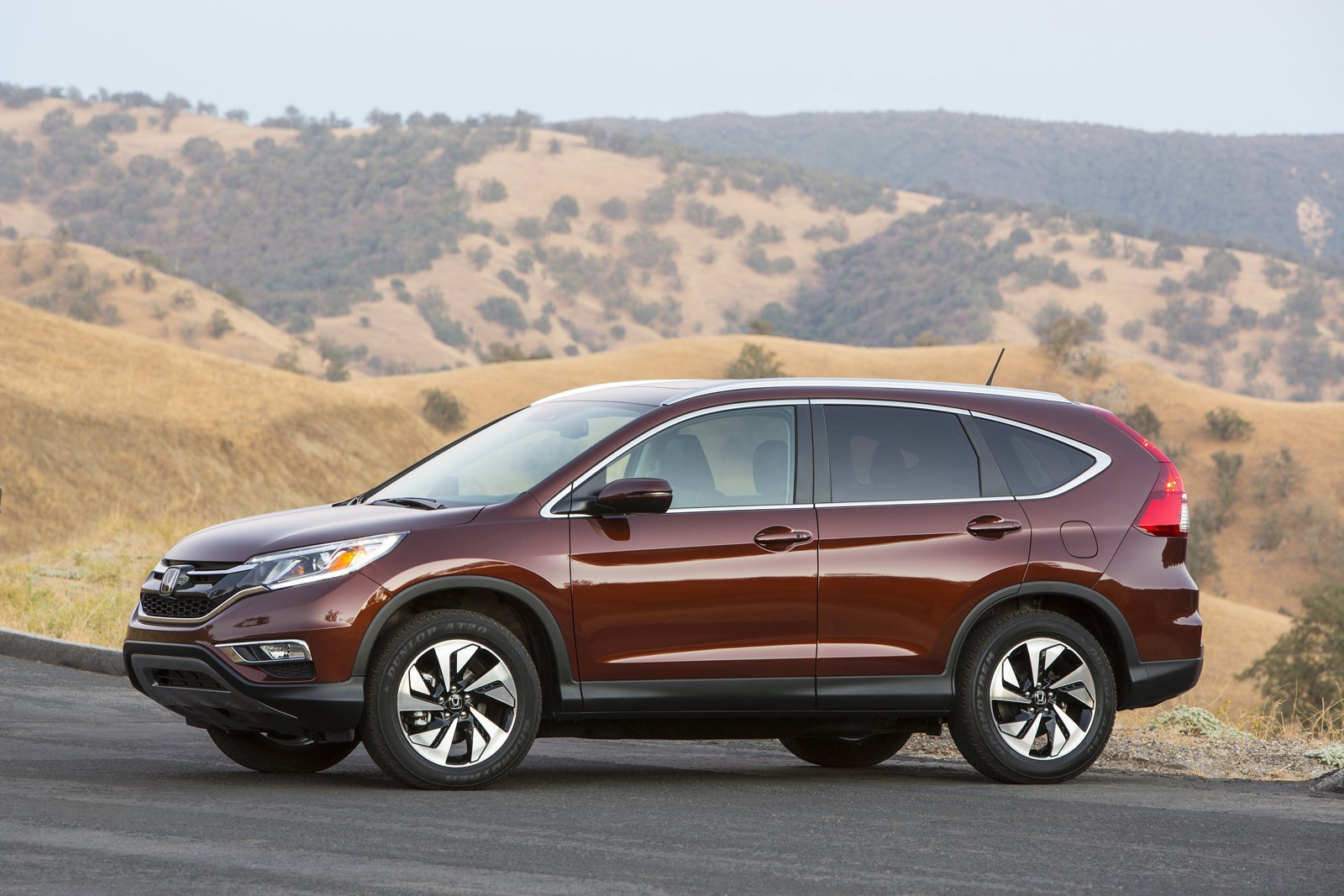

The Honda CR-V has long been celebrated for its striking blend of performance, style, and efficiency. But how does the fuel economy of this Compact Sport Utility Vehicle (SUV) stack up against its peers? Are you driving the most fuel-efficient model for your needs? As countries and cities intensify their focus on climate change, the importance of fuel economy in consumer choices remains paramount. The Honda CR-V, particularly the 2015 model, presents a captivating case for scrutiny.
When discussing gas mileage, it’s essential to consider a myriad of factors. What exactly constitutes ‘good’ gas mileage? For some, it may mean anything above 30 miles per gallon (MPG) while others may have different benchmarks based on engine size and vehicle weight. The 2015 Honda CR-V offers a notable mileage of approximately 26 MPG in the city and an impressive 33 MPG on the highway. By juxtaposing those figures with the national average of around 24 MPG for SUVs, the Honda CR-V shines as a contender in a competitive market.
So, how does Honda achieve these commendable figures? A plethora of elements contribute to the CR-V’s efficiency, beginning with its 2.4-liter 4-cylinder engine. This engine is designed with an emphasis on optimizing fuel consumption without sacrificing power. Thanks to Honda’s Earth Dreams technology, the CR-V boasts not only a responsive driving experience but also minimizes environmental impact. This technology integrates several elements, including Variable Timing Control (VTC), which enhances engine performance while keeping emissions at bay. Hence, it poses the question: can you really afford not to consider the CR-V’s eco-friendly features when shopping for a new vehicle?
Beyond the engine itself, several design principles have been at play in optimizing the Honda CR-V’s fuel efficiency. The aerodynamics of the vehicle is noteworthy; the streamlined shape reduces drag, allowing for smoother travel and better fuel consumption at higher speeds. This characteristic is particularly advantageous on long road trips where maximizing each gallon becomes increasingly significant. Additionally, lighter materials are utilized in the construction of the CR-V, further enhancing fuel efficiency while maintaining safety and durability.
However, it’s crucial to remember that fuel economy ratings can vary considerably based on driving conditions. Real-world driving often presents challenges that the theoretical MPG ratings may not account for. For instance, driving in stop-and-go city traffic can often result in a stark contrast to the highly optimistic highway numbers. Therefore, it raises vital considerations: are you prepared to alter your driving habits to align with the car’s best practices? Will you succumb to common driving pitfalls that would diminish your fuel efficiency?
Another compelling aspect of the Honda CR-V is its continuously variable transmission (CVT), which further aids in achieving superior fuel economy. Unlike traditional automatic transmissions that rely on fixed gear ratios, a CVT adjusts seamlessly to provide the optimal power-to-efficiency ratio. This continues to augment the driving experience, particularly in urban settings where rapid acceleration or deceleration is frequent. In echoing the sentiments of environmental affairs, the interplay between technology and sustainability could not be more evident in Honda’s engineering approach.
Moreover, understanding the implications of fuel economy extends beyond dollars and cents. As global carbon footprints loom larger, the importance of selecting vehicles designed for efficiency must be prioritized. The Honda CR-V stands as a model that emphasizes not only personal savings but also the broader environmental task at hand. Driving a more fuel-efficient vehicle is a choice that reverberates into the ether of environmental stewardship.
But what about competitiveness? The SUV market is replete with alternative options, each vying for attention through various features and attributes. Brands like Toyota and Ford have models with commendable fuel economy ratings, which may lead prospective buyers to ponder: what distinguishes the Honda CR-V from its competitors? One might find that the CR-V doesn’t merely rest on the laurels of its efficiency ratings; it combines practicality and style that resonate with a broad demographic, making it a household name in the compact SUV landscape.
Confirmation bias can often cloud decision-making. A potential buyer enamored with the sleek features of a rival SUV may overlook the economic and ecological sensibilities offered by the CR-V. Which attributes carry more weight in your purchasing decision—fuel economy, design, or technology? Navigating this matrix necessitates an informed and meticulous approach.
In an era where sustainable practices are increasingly valued, driving decisions must evolve accordingly. Civic consciousness now intersects with consumer choice. Thus, when evaluating the gas mileage of the Honda CR-V, an acute awareness of broader implications emerges. The harmonious balance of performance and efficiency can guide drivers toward choices that do not only benefit their wallets but also contribute positively towards mitigating climate change.
In conclusion, the Honda CR-V transcends the realm of being merely a vehicle; it epitomizes a philosophy rooted in sustainability, performance, and style. As pressures to adapt to an eco-conscious world intensify, it remains incumbent upon consumers to wield their purchasing power wisely. The Honda CR-V stands out with its combined virtues of favorable gas mileage and innovative engineering, ultimately posing a critical challenge: Will you embrace the change that efficient driving heralds?
