

Time, much like a river, flows ceaselessly, carving paths through the landscapes of our lives. In South America, where the Andes rise majestically and the Amazon hums with life, time is as diverse and complex as the continent itself. With an array of time zones that shift like the seasons, understanding the current time in South America is not merely a matter of checking a clock; it’s about navigating a tapestry woven from varied cultures, histories, and geographies.
South America spans an impressive 17 million square kilometers and crosses the equator, resulting in a striking dichotomy of climates and timekeeping systems. The continent is home to twelve sovereign nations, each with its own unique rhythm of life dictated by local customs and practices. Therefore, delving into the time zones of South America is akin to peeling back the layers of a richly embroidered tapestry, where every shift in thread reveals intricate patterns of society.
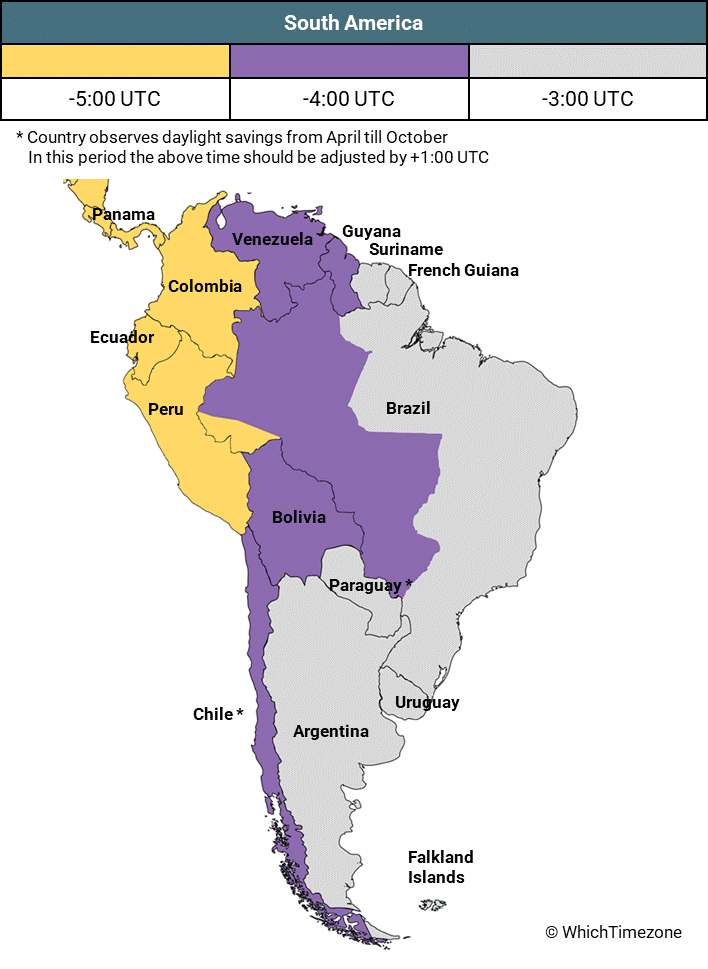
The five primary time zones across South America create a symphony of time that resonates differently in each country. The regions include:
- UTC-3: Brazil, Argentina, Paraguay
- UTC-4: Bolivia, Venezuela, Chile
- UTC-5: Colombia, Peru, Ecuador, Panama
- UTC-2: Brazil’s Atlantic islands (e.g., Fernando de Noronha)
- UTC-6: Parts of Western Chile (Magallanes) and some regions of Bolivia
Brazil, the largest country on the continent, showcases a kaleidoscope of time. While its eastern coast—home to bustling cities like São Paulo and Rio de Janeiro—adheres to UTC-3, the vast expanse of the country includes multiple time zones, creating a complex mosaic that complicates coordination. This dissonance reflects the cultural vibrancy of Brazil, where the rhythms of samba and bossa nova pulse through the hours.
Argentina, neighboring Brazil, closely aligns with UTC-3. Influenced by its European immigration and indigenous cultures, it boasts a unique identity that is mirrored in its approach to time. The phrase “now” in Argentina can often stretch elastically, embodying a relaxed understanding of punctuality, in stark contrast to the regimented precision found in other nations.
Venezuela, meanwhile, has carved its own niche with a quirky time offset of UTC-4:30. This unconventional choice reflects the nation’s distinct historical context. In a land rich with natural resources and human spirit, the time zone adds a layer of complexity—highlighting the country’s unique pursuit of identity amidst political and social upheaval.
The high-altitude wonder of Bolivia sits firmly at UTC-4, a distinction that accentuates its indigenous roots and cultural diversity. From the bustling markets of La Paz to the serene beauty of Lake Titicaca, the flow of time is felt not as a linear march toward deadlines but as a communal pulse. In this country, time is often viewed through the lens of relationships and the interconnectedness of community.
As one traverses the continent further north, Colombia, Peru, and Ecuador adhere to UTC-5. This unified time zone fosters a sense of conviviality, allowing for easier engagement across borders. However, it is essential to remember that local customs can subtly modify perceptions of time—a late afternoon in Colombia can extend into a vibrant evening filled with music and dance, transcending the clock’s limitations.
Yet, the time in South America is not static. The continent observes Daylight Saving Time (DST) in some regions, further complicating timekeeping. Countries like Chile advance their clocks during summer months, ushering in the longer daylight hours while also embracing a slightly altered rhythm for different seasons. The transition into and out of DST can feel like a sudden shift in the tide, reshaping daily routines and cultural expressions.
As the sun sets across the continent, it casts a beautiful chiaroscuro over the diverse nations, revealing a collage of lifestyles intimately intertwined with the concept of time. From the student studying in the twilight hours of a bustling Buenos Aires café to the dawn-seeker trekking the Andean paths of Peru, time in South America is imbued with stories that navigate both the past and present.
Understanding the time in South America is also an exploration of human experience—a reminder that while clocks may tick away the seconds, the soul’s clock beats to its own tempo. It invites the traveler to embrace spontaneity, to savor the moments of wonder that arise when schedules melt away, allowing the vibrant life of the continent to take center stage.
In conclusion, the current time in South America is more than a numerical value delineated by time zones; it is a reflection of cultural identities, historical narratives, and the inherent beauty of shared human experience. Whether one is reveling in the lively streets of Rio de Janeiro or enjoying the tranquil landscapes of Patagonia, time becomes a gentle companion, guiding every adventure and every fleeting moment on this diverse continent.
