
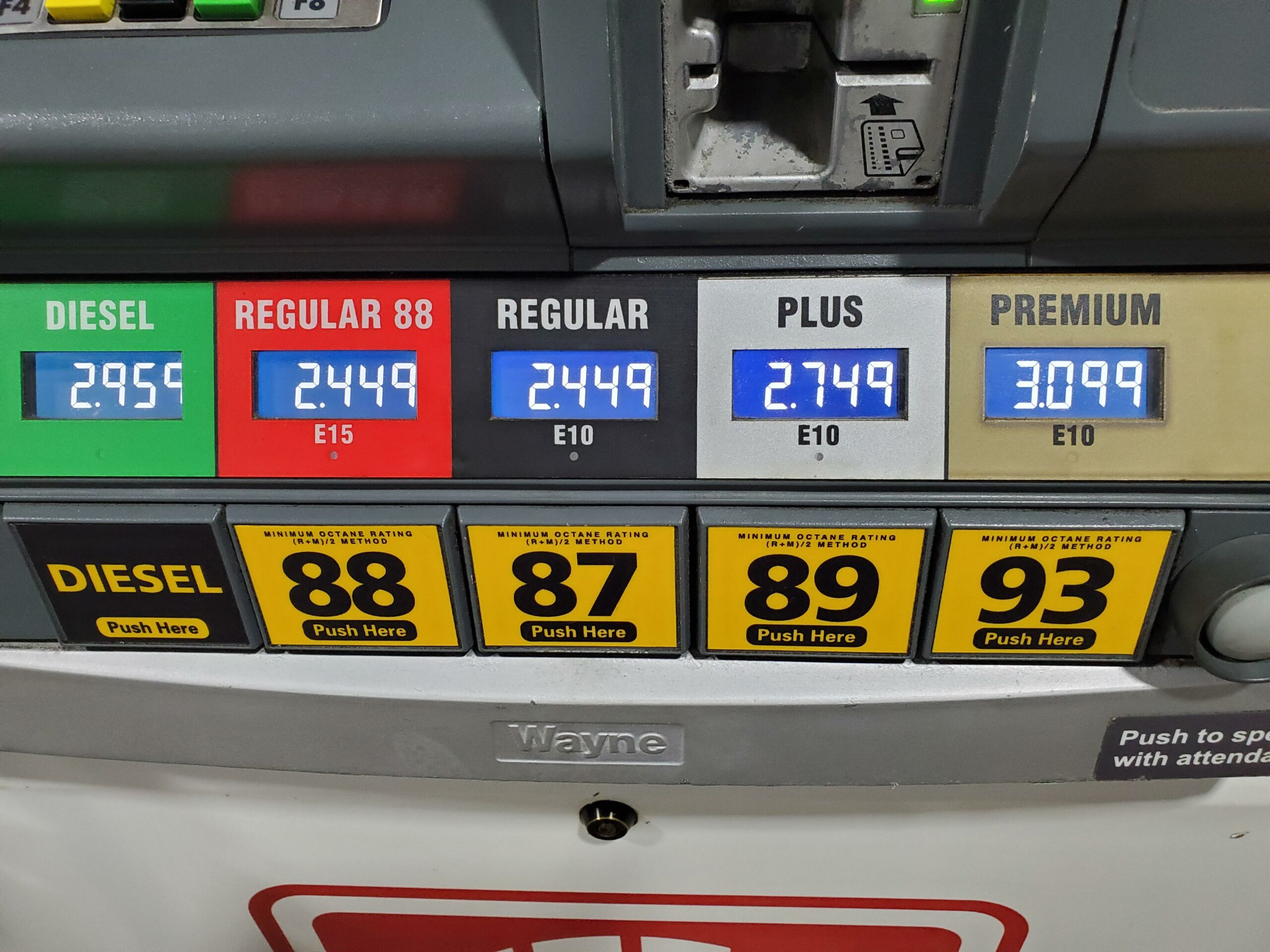

As gasoline prices continue to fluctuate, many drivers find themselves pondering the intricacies of different fuel options available at their local gas stations. With a growing focus on sustainability, alternative fuels such as E15 are becoming more prevalent. Yet, one question that often arises is: Is E15 gas the same as 87 octane? This inquiry, while seemingly straightforward, unravels a tapestry of complexities surrounding fuel composition and performance. So let’s dive deeper into this matter, shall we?
E15, which stands for “15% ethanol,” refers to a fuel blend that contains 15% ethanol and 85% gasoline. In contrast, 87 octane denotes the antiknock rating of the gasoline component in the blend. The octane rating of gasoline is a pivotal aspect that affects engine performance and fuel efficiency, particularly in terms of resistance to pre-ignition or knocking. But how does E15, with its ethanol content, gauge against the conventional 87 octane fuel?
To understand the nuances, it’s essential to dissect what constitutes the octane rating itself. Octane ratings measure a fuel’s ability to withstand compression without prematurely igniting. Regular gasoline typically has octane ratings of 87, while high-octane fuels can range upwards of 91 or even 93. However, ethanol has its unique characteristics. Pure ethanol has an octane rating of around 113. Therefore, the inclusion of ethanol in E15 can enhance the overall octane rating of the fuel, potentially offering better performance during combustion.
Now, here enters an intriguing dilemma. When stations offer E15 as an alternative, could it indeed provide benefits over traditional 87 octane gasoline? Advocates claim that E15 can be advantageous for some vehicles, particularly those designed for flexible fuel usage. By combining the properties of ethanol with gasoline, this blend potentially allows for improved fuel efficiency and reduced greenhouse gas emissions. However, not all vehicles are equipped to handle E15 reliably.
The Environmental Protection Agency (EPA) has designated specific vehicles as compatible with E15, including most cars manufactured after 2001. For older vehicle models, however, using E15 may pose challenges. Drivers with vehicles not explicitly rated for this higher ethanol content face the risk of engine damage and decreased performance. Therefore, it’s paramount for motorists to consult their owner’s manual or check with the manufacturer before making a switch.
Furthermore, the energy content of E15 differs from that of traditional gasoline. Generally speaking, when comparing the two, E15 contains slightly less energy per gallon due to the ethanol content. This could lead to a decrease in fuel economy when calculated out, compared to what one might see with pure 87 octane gasoline. What does this mean for the cost-benefit analysis for potential E15 users? It suggests that while you may save on fuel prices, potential reductions in fuel economy will require more frequent refueling, somewhat negating the initial savings.
Another consideration is the impact of ethanol on engine performance, particularly for those who frequently drive in extreme conditions or require optimal power, such as during towing or off-road activities. The combustion characteristics of high-ethanol blends can behave differently in turbocharged engines or ones with high compression ratios. For these vehicles, E15 might not be an ideal choice.
Interestingly, one of the more compelling arguments for E15 lies in its environmental benefits. Ethanol is derived from renewable resources, such as corn and sugarcane, resulting in a cleaner-burning fuel. This can substantially lower carbon emissions when compared to traditional fossil fuels. Thus, in an era marked by an urgent need for sustainable practices, embracing E15 provides an opportunity for eco-conscious drivers to make conscientious fuel choices.
But what about the price point? Is E15 inherently cheaper than 87 octane fuel? In many scenarios, yes. Fuel retailers often price E15 competitively to encourage its adoption within the marketplace. However, the cost can vary based on regional availability and market fluctuations. At times, traditional 87 octane might creep lower than its E15 counterpart, owing to differing supply and demand dynamics.
In this regard, savvy consumers may consider conducting a little research before filling up. Apps and websites dedicated to tracking fuel prices can provide insights as to whether E15 offers a tangible financial advantage over its 87 octane sibling on any given day. This could save you not only money but also time and inconvenience.
While navigating the choices at the fuel pump, one cannot overlook the question of consumer preference. There is a significant contingent of drivers loyal to their 87 octane. Familiarity can breed comfort, and as such, many are hesitant to make the leap to E15 due to uncertainty about its long-term effects on their vehicles. In contrast, for drivers who are adventurous and seek out innovations in automotive technology and fuel efficiency, E15 may represent a step forward.
So, to circle back to the pivotal question: Is E15 gas the same as 87 octane? The answer is not a simple yes or no. It ultimately hinges on a variety of factors, from vehicle compatibility to personal preferences and environmental considerations. One must weigh the pros and cons, considering everything from engine performance to eco-friendliness, before making that all-important decision at the gas station. In conclusion, while E15 may serve as a valuable alternative to traditional gasoline, it’s essential for drivers to arm themselves with knowledge before filling their tanks. With the right information, you can fuel your vehicle with confidence and purpose!
