

In the realm of employment law, non-compete agreements play a crucial role in delineating the boundaries of professional conduct after employment ends. In New Hampshire, as in many other states, these agreements can be a complex blend of legalese and practical considerations. Understanding whether non-compete agreements are enforceable in New Hampshire requires a deep dive into both statutory regulations and judicial interpretations.
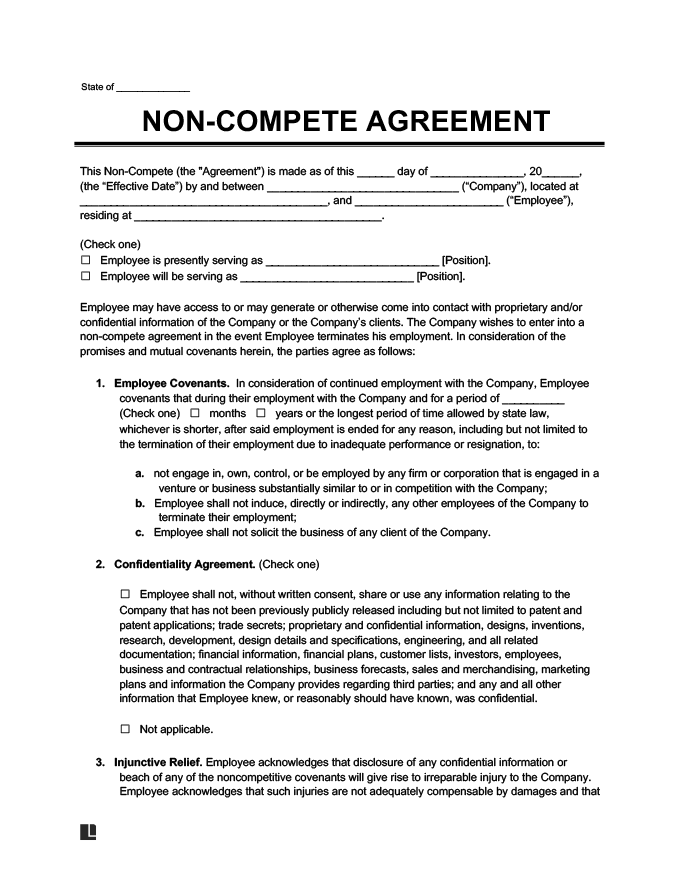
At the outset, it’s essential to comprehend the fundamental nature of a non-compete agreement. These legally binding contracts stipulate that an employee refrains from engaging in business activities that would directly compete with their employer for a specified duration and within a designated geographic area. While they serve the legitimate purpose of protecting an employer’s interests, their enforceability hinges on a variety of factors that intertwine with public policy and individual rights.
In New Hampshire, the enforceability of non-compete agreements is governed primarily by common law, as well as relevant state statutes. The New Hampshire Supreme Court has articulated a test to evaluate the enforceability of such agreements, emphasizing reasonableness in terms of duration, geographic scope, and the nature of the restricted activity. This three-pronged test represents a balancing act between protecting the employer’s legitimate business interests and allowing individuals the freedom to pursue gainful employment.
The first criterion, duration, considers how long the non-compete clause is in effect. Generally, the shorter the duration, the more likely a court will deem the agreement enforceable. New Hampshire courts have typically found that durations ranging from six months to two years can be reasonable, depending on the particular circumstances of the employment and industry standards. Yet, it is arduous to delineate a precise timeline—what is reasonable for a tech startup may not hold the same weight for a well-established law firm.
Next, we examine the geographic scope of the non-compete agreement. New Hampshire courts tend to prefer geographic restrictions that are closely aligned with the areas where the employer conducts its business. A nationwide restriction, for example, is likely to face significant scrutiny and may be struck down as overly broad. The contextual considerations accompanying geographic restrictions often include the size of the employer’s operations and the extent to which employees can be reasonably expected to have contact with clients or proprietary information within that zone.
The nature of the restrictions imposed by a non-compete agreement is equally critical. Agreements that unreasonably restrict an employee’s ability to work in their chosen profession are less likely to be enforceable. The courts tend to view the chosen occupation and the specific duties at hand to ensure that the agreement does not effectively ban an individual from making a living. For example, an impossibly broad clause that prevents a former employee from working in any capacity in the industry could very well be deemed unconscionable.
In addition to the three-pronged test elucidated above, New Hampshire courts also consider other pertinent factors that impact enforceability. One such factor is whether the employee received any consideration in exchange for signing the non-compete. For instance, if the agreement is part of a job offer, the promise of employment is typically a sufficient consideration. However, if the agreement is introduced after employment has already begun, the employer may need to provide additional benefits to make the agreement enforceable.
It’s important to note that specific industries may have additional regulations or standard practices that influence the enforceability of non-compete clauses. For example, in the healthcare sector, such agreements are often scrutinized more intensely due to their potential impact on patient care and access. Courts are exceedingly cautious about imposing non-compete agreements in professions where public welfare is at stake. Consequently, health care professionals could find themselves in an especially precarious position if the terms of their non-compete are deemed excessively punitive.
The rise of remote work and the flexibility of employment arrangements have added layers of complexity to the enforceability of non-compete agreements. With employees potentially working across state lines or in a decentralized manner, courts may need to consider where the employer’s market is located versus the employee’s residence. This geographical ambiguity can complicate the enforcement of a non-compete agreement, as courts navigate conflicting laws between jurisdictions.
In the event that a non-compete agreement is deemed unenforceable, employees could find solace and freedom to pursue new job opportunities without fear of legal backlash. However, it is equally crucial for employees to tread carefully; even if a non-compete appears overly restrictive, pursuing a legal challenge can be fraught with uncertainties and costs that merit meticulous consideration.
To summarize, non-compete agreements are enforceable in New Hampshire, but only if they meet the criteria of reasonableness concerning duration, geographic scope, and the nature of restrictions imposed. Both the employer’s needs and the employee’s rights must be balanced within the framework established by New Hampshire courts. As the work landscape continues to evolve with technology and new business models, understanding non-compete agreements will remain a vital area of focus for employees and employers alike. Educating oneself—and consulting with knowledgeable legal counsel—can empower individuals and businesses to navigate this intricate terrain effectively.
