
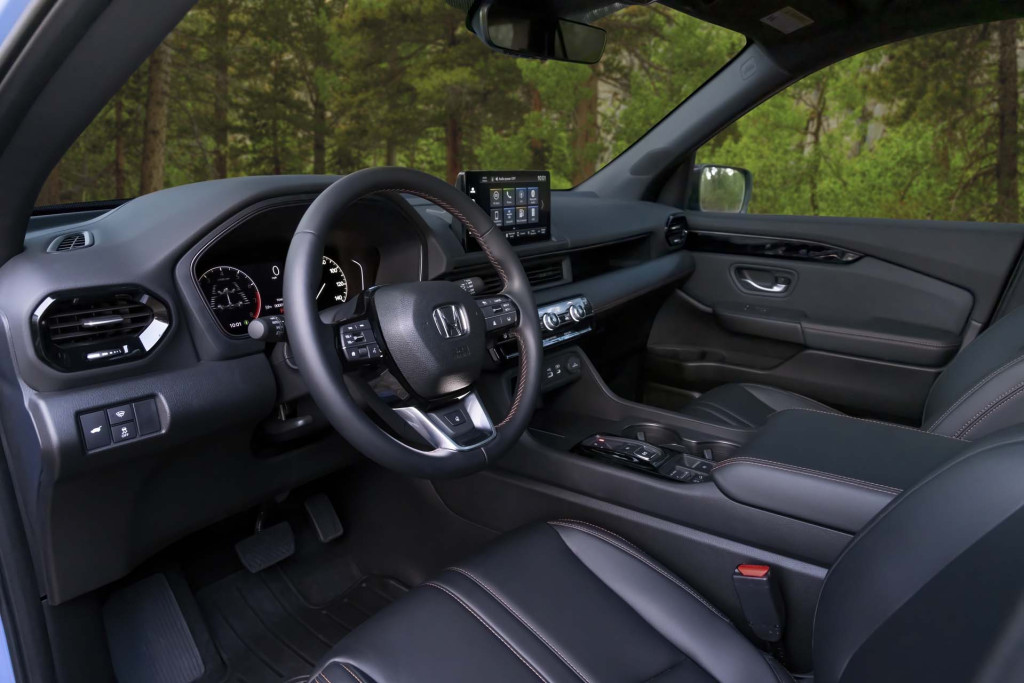

When we think of SUVs, particularly the 2011 Honda Pilot 4WD, many might envision a family vehicle, perfect for school runs or weekend getaways. However, there lies beneath that polished exterior a genuinely adventurous spirit. With the right modifications and an understanding of its specifications, this SUV transforms into an off-road contender. Central to this transformation is the critical aspect of ground clearance.
Ground clearance, or the distance between the underside of a vehicle and the ground, is often an overlooked characteristic when delving into the world of off-roading. In the case of the 2011 Honda Pilot, it boasts a ground clearance of approximately 7.5 inches. While this figure may not seem monumental compared to some rugged competitors, it is essential to consider more than just the numeric value. The Pilot’s design melds everyday utility with off-road capability, and its ground clearance plays a pivotal role in that equilibrium.
Understanding ground clearance requires looking beyond the mere measurement. It encapsulates a confluence of suspension design, vehicle weight distribution, and tire dimensions. The Honda Pilot’s four-wheel-drive system, paired with its relatively high ground clearance, offers a sense of security when navigating uneven terrain. This is where the spirit of adventure ignites; drivers can traverse not only smooth highways but also bumpy trails without the fear of undercarriage damage.
But what makes this SUV so adaptable? The answer lies in its independent front suspension and multi-link rear suspension, designed to absorb shocks and maintain stability. This sophisticated suspension engineering allows for more flexible wheel movements. When one wheel encounters an obstacle, the other three can maintain contact with the ground, ensuring traction remains steady. This capability is invaluable when scaling rocky inclines or trudging through muddy patches.
Furthermore, the configuration of the 2011 Honda Pilot promotes balance. A lower center of gravity, combined with its width, fosters stability. We often associate high-clearance vehicles with top-heavy designs that can easily tumble over. The Honda Pilot strikes a harmony that encourages confidence on precarious paths, making it a suitable option for both novice and seasoned off-roaders.
Now, let’s expand the horizon. The allure of going off-road invites exploration into the fascinating world of modifications. Enthusiasts often delve into aftermarket alterations to heighten ground clearance further. Lift kits, for instance, can elevate the suspension, enhancing not only ground clearance but also the vehicle’s capability to navigate more demanding terrains. When considering a lift, it is crucial to evaluate how it will affect the Pilot’s handling, alignment, and, ultimately, its performance.
But one must ask: isn’t there a downside to increased ground clearance? While elevating the vehicle may enhance off-road prowess, it may also lead to compromises in stability during on-road driving. Herein lies the importance of deliberate modifications; retaining the essence of how a vehicle performs on highways while augmenting its ruggedness is vital. The 2011 Honda Pilot, with its well-thought-out engineering, offers a pleasant medium, negotiating both realms with grace.
Another consideration is the choice of tires. Off-road tires, with their distinctive tread patterns and reinforced sidewalls, contribute significantly to the vehicle’s performance in wilderness settings. A set of well-chosen tires can elevate the Pilot from an ordinary family vehicle to an off-road champion. Polyurethane tires, for instance, provide excellent traction on slippery surfaces and are designed to endure rough conditions without compromising air retention.
Moreover, the Pilot’s design encourages robustness. The vehicle’s frame is engineered to withstand the stresses of off-road challenges, with a well-constructed skid plate system that protects vulnerable components like the oil pan and transmission. This built-in ruggedness ensures that even in adverse conditions, the Pilot remains operational, allowing drivers to venture where others might fear to tread.
Let’s not overlook the importance of technological aids. The 2011 Honda Pilot integrates various features that assist in navigating challenging environments. The Variable Torque Management (VTM-4) system, for instance, distributes power as needed between the front and rear wheels, enabling better traction on slippery terrain. This technology enhances confidence, allowing drivers to explore further than they might have imagined.
Yet, owning an off-road-capable vehicle like the 2011 Honda Pilot doesn’t simply entail a mechanical understanding; it is about embracing the off-road lifestyle. This encompasses learning the intricacies of vehicle maintenance, understanding terrain types, and appreciating the thrill of exploration. This SUV invites drivers into a community bound by a shared love for adventure.
The 2011 Honda Pilot 4WD, with its thoughtfully engineered ground clearance and versatile capabilities, beckons adventure seekers to reclaim forgotten trails and rediscover the beauty of nature. This vehicle promises a thrilling experience, challenging the notion of what an SUV can truly deliver. Embrace the call of the wild and let the Pilot guide your journey into the unknown.
In conclusion, while the 2011 Honda Pilot’s ground clearance may seemingly be a modest 7.5 inches, its true potential extends far beyond the numbers. This vehicle embodies a blend of practicality and adventure, consistently promising to reshape perceptions of the traditional family SUV. Whether navigating urban landscapes or conquering rugged terrains, the journey with the 2011 Honda Pilot is undoubtedly one of exhilarating discovery.
