
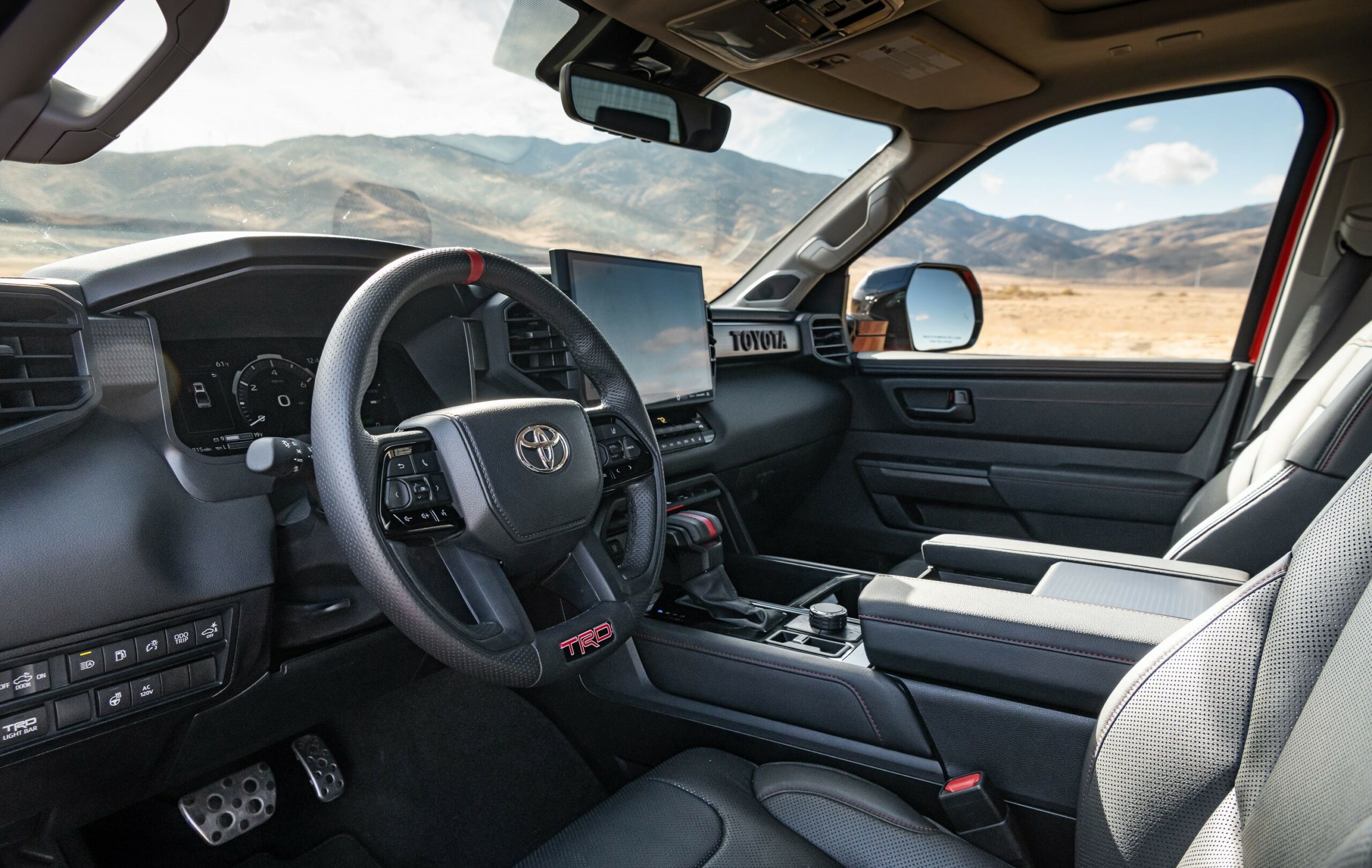

The automotive world is always abuzz with innovation, and the advent of hybrid technology is no exception. If you’re pondering the exquisite blend of power and fuel efficiency offered by the 2024 Toyota Tundra Hybrid, then you might find yourself asking: how does it stack up in terms of miles per gallon (MPG)? Let’s embark on an illuminating exploration of this vehicle’s efficiency, tackling the intricate dance between performance and economy.
The Tundra has long been revered as a stalwart in the full-size pickup segment. It’s robust, reliable, and perfect for tackling both rugged terrains and urban jungles. With the 2024 model, however, Toyota has augmented its offering by incorporating a hybrid powertrain. This evolutionary step not only marks a significant plunge into sustainability but also invites potential buyers to set aside preconceived notions of traditional trucks. Picture this: can a full-sized truck truly offer a respectable MPG without sacrificing its hallmark capabilities?
At the heart of the 2024 Toyota Tundra Hybrid lies a potent 3.5-liter twin-turbo V6 engine, seamlessly paired with an electric motor. This marriage of power and efficiency invites questions about its operational prowess. The electric motor provides additional torque, especially useful during initial acceleration, while the gas engine takes over once you reach cruising speed. Together, they bestow the Tundra with commendable MPG ratings that are notably higher than its gasoline-only counterparts.
Imagine driving a massive truck without worrying incessantly about your fuel stops. For many, that’s a tantalizing proposition! The EPA estimates for the Tundra Hybrid hover around 20 MPG in the city and 24 MPG on the highway. These numbers suggest a promising departure from the thirstier models of yore. For those who often embark on long journeys or who utilize their truck for both work and play, this fuel efficiency could lead to significant savings.
However, let’s not sugarcoat the challenge that comes with it. The Tundra Hybrid may boast superior MPG figures, yet it presents a dichotomy: how does one compare the driving experience against sheer robustness and towing capability? While the hybrid is undeniably efficient, can it still hold its ground against its more conventional, power-centric brethren in towing and payload capacity? This is where discerning the Tundra’s real-world application becomes critical.
The 2024 Tundra Hybrid’s towing capacity is intriguing as well. Equipped to tow up to 12,000 pounds, it reflects Toyota’s intent to maintain the truck’s rugged DNA while adding hybrid technology. However, those who intend to use the Tundra for heavy hauls should be aware that the MPG figures can fluctuate based on load. When hauling cargo or towing heavy trailers, expect the MPG to dip. This brings us back to our earlier question: while the hybrid offers better fuel efficiency, does it compromise any of the robust capabilities that Tundra owners cherish?
While pondering these queries, let’s also take a moment to discuss real-world applications. The experience behind the wheel of the Tundra Hybrid is nothing short of impressive. Drivers can expect a smooth, responsive ride thanks to the electric assistance, especially in stop-and-go traffic. This creates less strain on the engine, allowing increased fuel efficiency. The transition between electric and gas power feels almost ethereal, ensuring that even hybrid novice drivers can operate this truck with ease.
Moreover, the design elements of the 2024 Tundra Hybrid enhance its practicality. An intuitive infotainment system, spacious interior, and ample cargo bed space exemplify Toyota’s commitment to functionality. But ask yourself: does this sleek aesthetic distract from the truck’s rugged utilitarian purpose? Can you truly call a vehicle that looks this jaw-dropping a workhorse?
An important aspect of owning a hybrid vehicle is the ecological footprint. As more buyers gravitate toward sustainable options, the Tundra Hybrid stands as a beacon for those hoping to minimize their impact without sacrificing performance. Toyota’s commitment to hybrid technology paints a hopeful picture for the future of the automotive industry, prompting a re-evaluation among consumers about what it means to be eco-friendly without compromising lifestyle.
On the technology front, Toyota integrates various features that enhance driving experience and fuel economy. For instance, the regenerative braking system helps recapture energy typically lost during braking, converting it back into usable power. This could raise a valid challenge, however: Do all drivers understand how to leverage this feature effectively? Understanding such intricacies is essential for extracting optimal efficiency from any hybrid vehicle.
Ultimately, as we gaze toward the horizon of the automotive landscape, the question remains: is the 2024 Toyota Tundra Hybrid the savior of the modern truck—or merely a stepping stone toward a utopian blend of power, efficiency, and functionality? As we watch manufacturers evolve their approaches to hybrids and sustainability, it is clear that the shift is palpable and here to stay.
In conclusion, the 2024 Toyota Tundra Hybrid indeed advances the benchmarks of fuel efficiency while retaining the power and capabilities expected from a full-sized truck. Just remember that, like any vehicle, it comes with its trade-offs. The ideal ownership experience will ultimately depend on individual needs and priorities. So, next time you park your truck, pause for a moment. Is it simply a means of transport, or an eco-conscious step toward a more sustainable future?
